James Hardie Garage Conversion ADU: The Long Beach Owner’s Guide
We stock and install James Hardie siding, trim, and panel components for garage conversion ADUs across Long Beach, with typical repair or replacement work running $850 to $2,400 installed depending on the part and the scope. Most calls start with a homeowner noticing cracking HardiePlank lap siding, water staining at trim joints, or gaps opening where the original garage wall meets the new ADU framing. Ben Ortega walks every Long Beach estimate personally, and we carry the most common James Hardie profiles on the truck so we can often handle the swap in a single visit.
What usually brings the problem to light: after a garage conversion, the old garage slab and the new living-space walls settle at different rates. That movement shows up first where James Hardie siding meets the transition, and it’s the reason so many Long Beach homeowners call us about the same corner of the same wall. We’re an independent service provider, not affiliated with James Hardie, and we work with their products because the material itself holds up well in coastal air when the install details are handled correctly.
Which James Hardie Models This Applies To
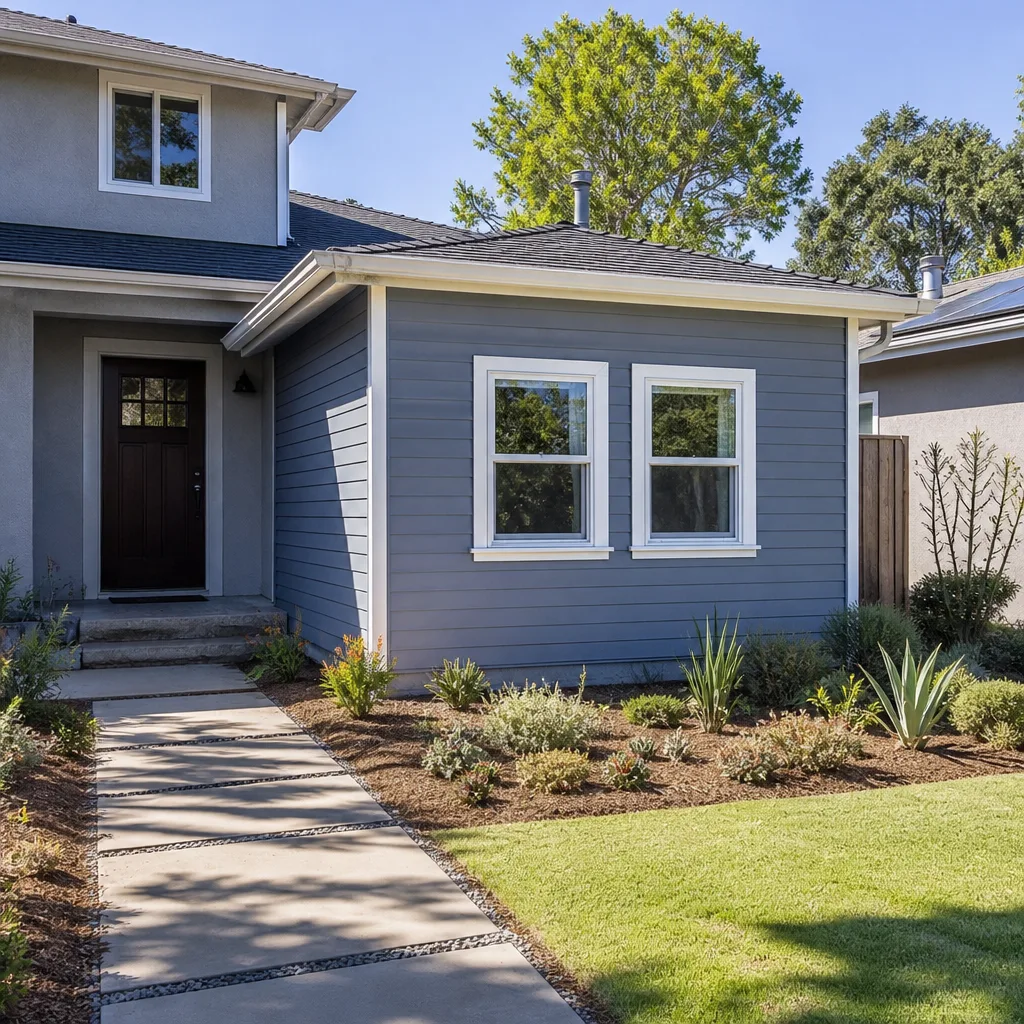
For Long Beach garage conversion ADUs, the parts that fail most often are HardiePlank lap siding (the 5/16-inch and 7/16-inch profiles that were common on garage exteriors from the mid-2000s onward), HardieTrim boards around doors and window openings, and HardiePanel vertical siding used on the original garage face. The key compatibility gotcha is this: HardiePlank lap siding comes in 8.25-inch and 12-inch exposures, and you cannot mix them on the same wall without visible line breaks. We measure the existing exposure before quoting so the replacement matches exactly.
On the OEM-versus-aftermarket question: we always quote genuine James Hardie products for visible siding and trim because the color, texture, and edge profile are baked into the material during manufacturing, and aftermarket equivalents rarely match after a couple of Long Beach summers. For hidden elements (flashing, weather barrier, a backing strip behind a joint), a high-quality aftermarket product works fine and saves money. If you’re not sure what you have, check the back of a loose piece: James Hardie siding is stamped with the product name and plant code, and a bundle from the original install will carry a production date sticker.
Signs Your James Hardie Garage Conversion ADU Is Failing
- Hairline cracks running horizontally through lap siding near the bottom course. This usually means water got behind the board at the foundation transition and the fibers are swelling. On a converted garage in Long Beach, the original slab often sloped toward the house, and that pitch pulls moisture into the lowest course.
- Caulk pulling away at trim joints around windows and the entry door. Movement between the old garage framing and the new ADU framing opens these joints seasonally. The caulk fails first, then water follows.
- Swollen or soft trim boards at outside corners. HardieTrim is cement-based and resists rot, but if an original corner wasn’t flashed properly behind the board, repeated wetting will make it buckle and push the paint off.
- Gaps between siding courses that widen and narrow through the year. That’s thermal and moisture expansion in the framing behind the siding. James Hardie material itself doesn’t move much, but the wall behind it does, and the fasteners gradually loosen.
- Water stains on the interior drywall near the old garage-door header. When a garage door opening gets filled in and sided over, the transition flashing at the header is the single most common leak point we see in Long Beach conversions. The siding above it isn’t failing: the detail behind it is.
Replacement Cost & What’s Included
Every price we give in Long Beach is a written, line-item quote before work starts, so there’s no surprise line added after the crew arrives. For James Hardie work on a garage conversion ADU, here’s what honest pricing looks like:
- Single-course siding repair (one to three boards): $450 to $750 installed, including color-matched replacement, removal of the damaged course, and the joint treatment.
- Trim board replacement at a door or window opening: $350 to $600 per opening, including new flashing where the old flashing failed.
- Full re-side of the converted garage exterior (single-story, under 400 square feet): $1,800 to $2,400, including tear-off, weather barrier inspection, and disposal.
- Add-on: repainting the replaced sections to match the existing finish: included when the repair area is under 50 square feet; quoted separately for larger areas.
The price moves based on how much of the transition detail we need to expose to do the job right. If the old flashing at the garage-door infill is rotten behind otherwise good siding, fixing the siding alone just buys you a few months. We explain that before we touch anything. Every repair we do is covered by Seedling’s 365-Day Done Right Promise: if it isn’t done right, we make it right.
DIY or Call Us?
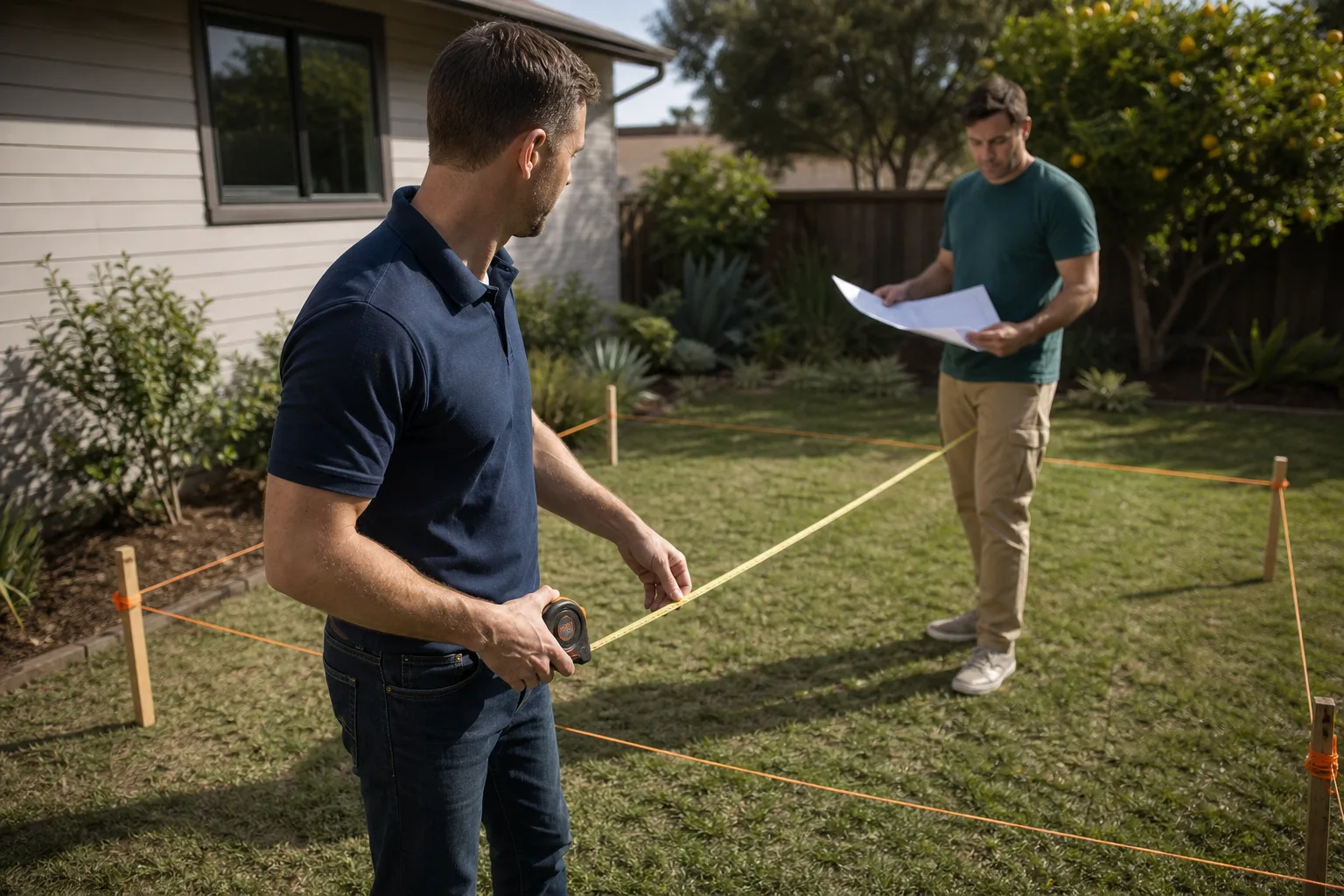
You can safely check a few things yourself: look for visible cracks, run a hand along bottom courses for softness, and check whether caulk is pulling away at joints. What we do not recommend doing yourself is pulling boards off a garage conversion wall in Long Beach. The fasteners may be corroded, the board may extend behind a transition you cannot see, and the wall’s weather barrier is doing a job you don’t want to disturb without a replacement plan ready. If the siding joint sits at the old header detail and water is getting in, a partial DIY job can turn a $600 repair into a $3,000 water-damage problem. Call us at (562) 362-4592 and we’ll tell you straight whether it’s a board swap or something bigger.
FAQs
James Hardie siding typically lasts 20 to 30 years on a Long Beach garage conversion when the original install details are sound; in coastal air, the material itself handles salt well, but the fasteners and flashing behind it usually dictate the actual lifespan. If the bottom course sits too close to grade or the sprinklers hit the wall daily, expect to address the lower boards in 8 to 12 years. Call (562) 362-4592 for an on-site look.
No, James Hardie siding cannot be repaired once it’s cracked or swollen; the board is a cement-fiber composite, and there’s no filler that will hold up through Long Beach’s wet winters and dry summers. What we can do is replace only the affected course or board, which costs far less than a full re-side. We’ll quote the exact board count before work begins.
Most single-course siding repairs and trim replacements on a Long Beach garage conversion ADU take one half-day to one full day, from removal through reinstallation, flashing, and clean-up. If the repair opens up an unexpected framing or weather-barrier issue, we stop and walk you through the change before proceeding, with the adjusted price in writing first.
Yes, we keep the common James Hardie profiles, trim sizes, and color-match samples for Long Beach garage conversions on our truck, including HardiePlank lap siding in the standard exposures and HardieTrim in the most-used widths. If your project needs a less common profile or a special-order color, we handle that through our Long Beach supplier and tell you the timeline before you commit. Seedling also works with Abodu, Cover, and Dvele prefab ADU systems, so we can coordinate the siding work with the rest of your project.
Call (562) 362-4592 to schedule your free estimate. We’ll walk the wall with you, measure the exposure, and hand you a written price before any work starts.
Written by Ben Ortega, Owner, Seedling ADU Long Beach at Seedling ADU Long Beach, serving Long Beach and nearby areas.