Last updated October 15, 2026
ADU Cost Breakdown: The Long Beach Homeowner’s Reference for 2026
Here is the counterintuitive truth about ADU pricing in Long Beach: the headline number a builder puts in a first quote is rarely the number a family pays at the end. In our experience building accessory dwelling units across Long Beach, the gap comes from four cost categories that almost never appear in an initial estimate: utility connection fees, permit and school impact charges, site preparation, and finish allowances that don’t match what the homeowner actually selects. This guide reverse-engineers a real 2026 ADU budget for Long Beach by walking through where those gaps live, what they cost, and how to plan for them before a single tool is picked up. For a broader overview, see The Complete Guide to ADU in Long Beach.
Quick Answer
A detached ADU in Long Beach typically costs between $220,000 and $380,000 in 2026, a garage conversion runs $120,000 to $200,000, and an attached addition-style ADU falls between $180,000 and $300,000. The gap between an initial quote and the final invoice is usually 18 to 27 percent, driven by utility connections, permit fees, site prep, and finish upgrades. The surest way to close that gap is a written fixed-price contract before work begins.
Table of Contents
- The Four Hidden Cost Categories in Every Long Beach ADU Quote
- Line-Item Cost Table: Long Beach ADU Budgets by Type in 2026
- Long Beach Permit Fees, School Impact Charges, and Utility Connection Costs
- How Finish-Grade Allowances Work and Why They Are Almost Always Underestimated
- Fixed-Price Written Contracts vs. Time-and-Materials: The Real Financial Risk
- What a 365-Day Done Right Promise Is Worth in Dollar Terms
- Long Beach-Specific Cost Drivers: Climate, Soil, and Code
- Prefab and Modular ADU Pricing in Long Beach
The Four Hidden Cost Categories in Every Long Beach ADU Quote
When a homeowner in Long Beach asks for an ADU estimate, most contractors produce a number that covers what they call “hard costs”: framing, roofing, drywall, flooring, basic electrical, basic plumbing, and a general finish package. That number sounds reasonable. It is also incomplete. Four categories typically get left out of the first quote, and together they add 18 to 27 percent to the final invoice. We see this pattern consistently in Long Beach, from Naples Island to Bixby Knolls.
Here are the four categories and what they actually cost in Long Beach in 2026:
1. Utility Connections and Trenching
Connecting a new ADU to sewer, water, and power is not free. If the main sewer line is on the far side of the house, the trench alone can run $8,000 to $20,000 depending on depth and distance. Long Beach Gas and Water Department charges connection fees that most first quotes never mention. A homeowner who plans for $12,000 to $25,000 in utility work is planning realistically.
2. Permit Fees, Plan Checks, and School Impact Charges
The City of Long Beach charges a building permit fee based on project valuation (see ADU Permits, Codes & Inspections in CA: What You Need to Know). Plan check fees, inspection fees, and the school impact fee for new residential square footage all stack on top. For a detached ADU, expect $8,000 to $18,000 in total city fees before any construction begins. For a garage conversion, the number is lower, typically $5,000 to $10,000, because there is less new foundation and utility work.
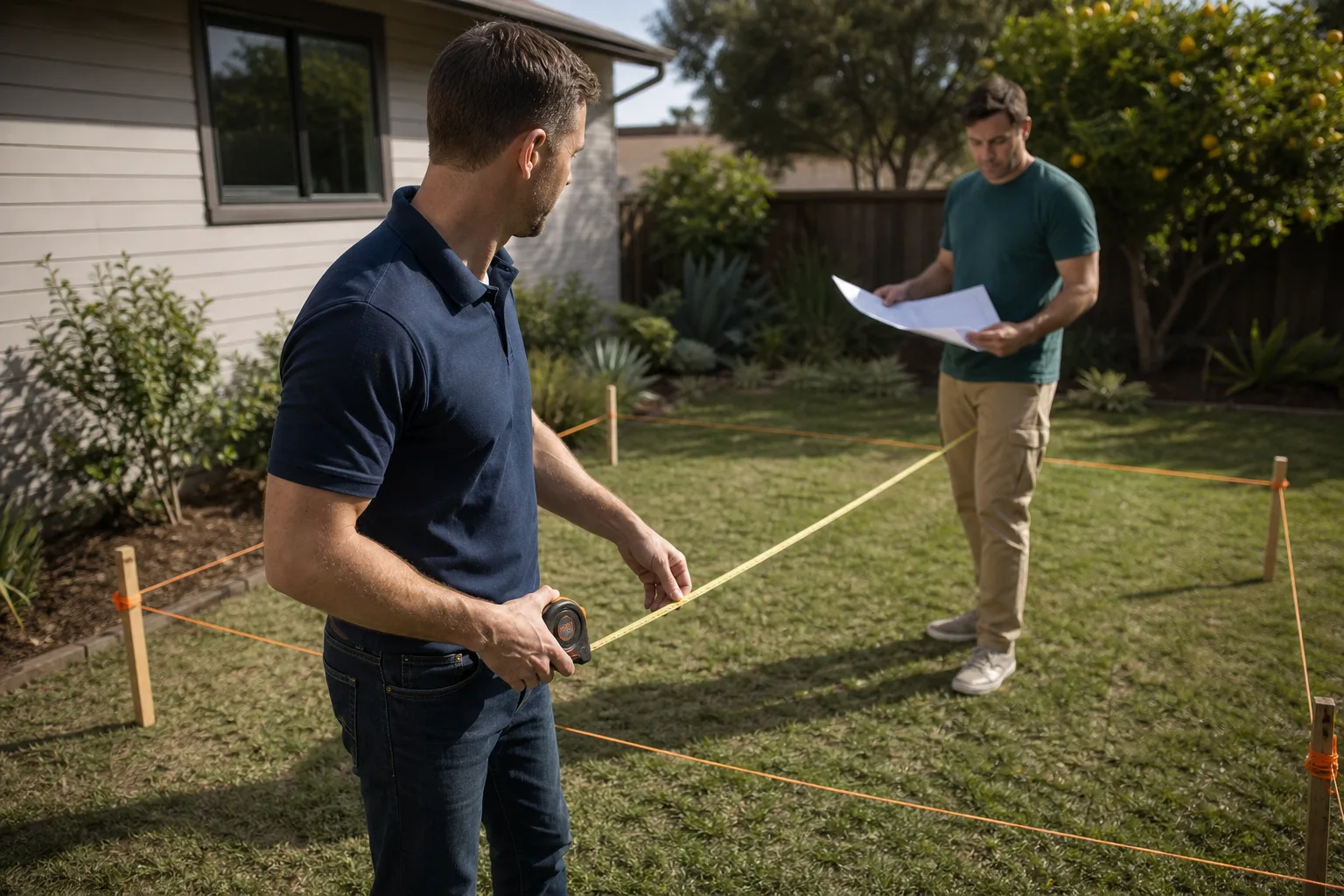
3. Site Preparation
Long Beach soil conditions vary by neighborhood. Some lots near Alamitos Bay have older fill that compacts unevenly. Older homes in Belmont Heights and Rose Park often have sewer lines that need upgrading before an ADU can connect. Site prep includes demolition of existing structures, grading, tree or root removal, and sometimes soil compaction testing. Budget $5,000 to $30,000 depending on what the lot actually holds.
4. Finish-Grade Allowances That Do Not Match Reality
This is the silent budget killer. A first quote often includes an “allowance” for flooring, cabinetry, countertops, tile, and fixtures. The allowance number is usually set at the lowest functional grade. When a homeowner selects mid-grade flooring or a quartz countertop instead of the allowance-grade laminate, the difference comes out of pocket. For a one-bedroom ADU, that difference is typically $15,000 to $35,000. We cover this in detail below.
Line-Item Cost Table: Long Beach ADU Budgets by Type in 2026
This table reflects what we currently see across Long Beach for four ADU types: detached new construction, attached additions, garage conversions, and junior accessory dwelling units (JADUs). These are realistic 2026 ranges, not entry-level teaser numbers. Each phase is broken out so a homeowner can see where money actually goes.
| Cost Phase | Detached ADU (800-1,000 sq ft) | Attached ADU (500-700 sq ft) | Garage Conversion (400-500 sq ft) | JADU (300-450 sq ft) |
|---|---|---|---|---|
| Design and architectural drawings | $8,000 – $15,000 | $6,000 – $12,000 | $4,000 – $8,000 | $3,000 – $6,000 |
| Permits, plan checks, school impact fees | $8,000 – $18,000 | $6,000 – $14,000 | $5,000 – $10,000 | $3,000 – $7,000 |
| Site prep, demo, trenching, grading | $12,000 – $30,000 | $8,000 – $22,000 | $5,000 – $15,000 | $2,000 – $8,000 |
| Foundation and structural | $25,000 – $45,000 | $15,000 – $30,000 | $10,000 – $20,000 | $5,000 – $12,000 |
| Framing, roofing, siding | $35,000 – $60,000 | $22,000 – $40,000 | $12,000 – $25,000 | $8,000 – $15,000 |
| Plumbing, electrical, HVAC, solar-ready wiring | $20,000 – $38,000 | $15,000 – $28,000 | $12,000 – $22,000 | $8,000 – $15,000 |
| Insulation, drywall, paint | $12,000 – $20,000 | $9,000 – $16,000 | $7,000 – $12,000 | $5,000 – $9,000 |
| Flooring, cabinetry, countertops, tile | $20,000 – $40,000 | $14,000 – $28,000 | $10,000 – $20,000 | $7,000 – $14,000 |
| Windows, doors, hardware | $8,000 – $16,000 | $6,000 – $12,000 | $4,000 – $9,000 | $3,000 – $6,000 |
| Appliances, lighting, fixtures | $6,000 – $14,000 | $5,000 – $10,000 | $4,000 – $8,000 | $3,000 – $6,000 |
| Landscaping, walkway, cleanup | $5,000 – $12,000 | $3,000 – $8,000 | $2,000 – $5,000 | $1,500 – $4,000 |
| Total realistic range | $159,000 – $308,000 | $109,000 – $220,000 | $75,000 – $154,000 | $48,500 – $101,000 |
Note that the table shows construction-phase totals. The earlier “Quick Answer” ranges for a finished, move-in-ready detached ADU ($220,000 to $380,000) include finish upgrades above allowance grade, landscape restoration, and a contingency. These are the numbers families actually spend when they choose the flooring they want, the countertop they like, and a door that matches the main house. A JADU is the least expensive path in Long Beach because it converts existing space inside the primary home: no new foundation, no separate utility connections, and simpler permitting.
The biggest variable in that table is the finish line. A detached ADU framed and dried-in is comparatively predictable. The flooring, cabinets, tile, and lighting a family picks are not. This is where most Long Beach ADU budgets bend.
Long Beach Permit Fees, School Impact Charges, and Utility Connection Costs
Every ADU in Long Beach triggers a set of city fees that exist regardless of which builder you hire. They are not negotiable, they are not markup, and they almost never appear in a first quote because most contractors quote only their own labor and materials. Understanding them before you sign anything changes how you read any estimate.
Building Permit Fees
The City of Long Beach calculates building permit fees as a percentage of the declared project valuation. The valuation is the city’s estimate of what the work costs, not what you paid. For a detached ADU valued at $200,000, permit fees alone typically land between $4,000 and $7,000. Plan check fees add roughly 30 to 50 percent on top of the permit fee. Inspection fees are separate. In practice, a detached ADU in Long Beach carries $6,000 to $12,000 in building department charges before the first inspection happens.
School Impact Fees
California allows school districts to charge impact fees on new residential square footage. For an ADU under 750 square feet, the fee is often reduced or waived under state law. For an ADU over 750 square feet, Long Beach homeowners should expect a school impact fee, which in 2026 typically falls between $4 and $5 per square foot. A 1,000-square-foot detached ADU can trigger $4,000 to $5,000 in school fees alone. This is one reason garage conversions and smaller attached ADUs cost less: they often stay under the threshold.
Utility Connection Fees
Long Beach Utilities charges a sewer connection fee for new residential connections. Water meter and connection fees apply when an ADU gets its own meter, which most detached ADUs in Long Beach require. Electricity connection costs depend on whether Southern California Edison runs a new service drop or the ADU shares the main panel. Sharing a panel is cheaper but often requires a panel upgrade, which runs $3,000 to $6,000. A new service drop can cost $5,000 to $12,000 depending on distance and trenching conditions.
Here is the takeaway for planning: a Long Beach homeowner building a detached ADU should budget $8,000 to $18,000 for all city and utility fees combined. A garage conversion owner should budget $5,000 to $10,000. If a contractor’s first quote does not mention these fees, ask whether the quote is “all-in” or “construction only.” The difference is meaningful.
How Finish-Grade Allowances Work and Why They Are Almost Always Underestimated
Most ADU contracts in Long Beach include an “allowance” for finish materials: flooring, cabinets, countertops, tile, backsplash, plumbing fixtures, lighting fixtures, and sometimes paint. The allowance is a dollar amount the contractor assigns to each category. If the homeowner stays under the allowance, the project costs what the contract says. If the homeowner goes over, the difference is paid as a change order.
Here is the problem. The allowance numbers in most first quotes are set at what the industry calls “builder grade” or “allowance grade”: the cheapest durable option that can technically be called complete. A builder-grade allowance for a one-bedroom ADU might allocate $4,000 for all flooring. The homeowner walks into a Long Beach flooring showroom and picks a mid-grade engineered hardwood or LVP at $6 to $9 per square foot. For a 600-square-foot ADU, that is $3,600 to $5,400 in materials alone, before installation. The allowance is blown before the first box is opened.
The same pattern repeats with cabinets, countertops, tile, and faucets. A typical gap between allowance grade and what a family actually selects runs:
- Flooring: allowance $4,000 – actual selection $7,000 – $11,000
- Cabinets: allowance $5,000 – actual selection $9,000 – $14,000
- Countertops: allowance $2,500 – actual selection $4,500 – $7,500
- Tile and backsplash: allowance $1,500 – actual selection $3,000 – $5,000
- Fixtures and lighting: allowance $2,000 – actual selection $3,500 – $6,000
Across a full ADU, that gap totals $15,000 to $35,000. This is not contractor greed. It is the difference between a price written to win a bid and a price that reflects what a person actually wants in their home. The fix is simple: ask for the written allowance schedule before signing. See the numbers. Then add 30 to 40 percent to each allowance category if you intend to choose finishes you actually like. If a builder shows you the allowance schedule without being asked, that is a signal worth noting.
Fixed-Price Written Contracts vs. Time-and-Materials: The Real Financial Risk
There are two common ways to contract an ADU in Long Beach. One puts the risk on the builder. The other puts it on the homeowner. The contract type often matters more than the quoted number.
A fixed-price written contract states the full project price in writing before work begins. Change orders can still occur, but they must be agreed to in advance, and they are the exception rather than the rule. A time-and-materials agreement charges the homeowner for actual labor hours plus actual material costs, with no ceiling. On a six-month ADU build, time-and-materials can drift 25 to 40 percent above the original estimate without any single decision feeling like a change.
We sat with a homeowner in Bixby Knolls last year whose time-and-materials garage conversion started at an estimate of $110,000 and closed at $182,000. Every line item was defensible. None of it was malicious. The problem was structural: nobody had committed to a number, so the number moved. That homeowner now tells her neighbors to ask one question before signing anything: “Is this price fixed in writing?”
A written fixed price matters more in Long Beach because construction timelines run long. Permitting alone can take four to eight months depending on the neighborhood and the scope. Material prices move during that window. A fixed-price contract means the builder carries that risk. A time-and-materials contract means the homeowner does. The financial exposure is not hypothetical: on a $250,000 ADU, a 20 percent drift is $50,000. That is a car. That is two years of college tuition for a kid. The contract type is the most important line on the page.
What a 365-Day Done Right Promise Is Worth in Dollar Terms
A workmanship warranty is easy to dismiss until something fails. Then it is a number. Here is what post-completion repairs actually cost on Long Beach ADUs, based on what we have repaired and what we hear from homeowners who call us after another builder has walked away.
- Cracked drywall at door and window corners: $400 to $1,200 per occurrence. These cracks appear as a home settles over the first year. One or two occurrences are common; five or six are not unheard of on a rushed build.
- Roof leak at flashing or penetration: $800 to $3,500 depending on location and the extent of ceiling damage.
- Doors out of alignment due to settling: $250 to $800 per door. An ADU with four interior doors can hit $3,000 quickly.
- Plumbing leak at a fitting: $500 to $2,500 if caught early. If a slow leak runs inside a wall for months, add drywall repair, re-insulation, and sometimes mold remediation: $5,000 to $15,000.
- Electrical fault or failing outlet: $300 to $1,500 per incident.
- Water heater failure within the first year: $1,800 to $4,000 for replacement and installation.
Most of these are covered by a written workmanship warranty. A 365-Day Done Right Promise means that if any of these show up in the first year, the builder makes them right. The dollar value is not the warranty document. It is the absence of a bill. A family that builds without a written warranty and hits a roof leak plus a plumbing leak plus two cracked corners is out $7,000 to $20,000 in year one. A family with a written 365-day promise is out nothing but a phone call.
We also want to be clear about what a warranty cannot cover. It does not cover damage from tenant misuse, changes the homeowner makes, or normal wear. But workmanship defects, installation errors, and settling-related failures within the first year? Those belong to the builder. That is the point of the promise. Seedling ADU Long Beach writes it into every contract, including garage conversions and home additions in Long Beach.
Long Beach-Specific Cost Drivers: Climate, Soil, and Code
Long Beach is not a generic Southern California market. Three local factors move ADU costs in ways that a builder from Irvine or Torrance may not anticipate.
First, soil. Long Beach sits partly on older alluvial fill, and some neighborhoods, particularly near the Los Angeles River and Alamitos Bay, have soils that compact unevenly. A foundation that is fine in Huntington Beach may require deeper footings or compaction testing in Long Beach. That is an additional $4,000 to $15,000 that a first quote from an out-of-area builder often misses.
Second, marine air. Homes west of Cherry Avenue and south of Willow Street get salt-laden fog year-round. Exterior materials matter. James Hardie siding and trim hold up better than budget alternatives in that environment, and choosing them at the start costs less than replacing warped trim in year five. We recommend James Hardie for any Long Beach ADU within two miles of the coast.
Third, code and zoning. Long Beach has specific ADU standards for setbacks, height, and parking. Garage conversions in older neighborhoods like Rose Park and Belmont Heights often involve detached garages built in the 1920s and 1930s (watch for ADU Warning Signs: A Long Beach Homeowner’s Reference Guide). Those structures frequently need seismic reinforcement and foundation work before conversion can begin. A garage conversion is not always cheaper than new construction when the garage is 90 years old. The condition of the existing structure matters more than the category name.
The practical upshot: get a builder who knows these Long Beach conditions before they bid. A builder who has worked in Naples Island, Bixby Knolls, and Rose Park already knows what the soil, the fog, and the code will do to a budget. That knowledge shows up in the first written price, not as a change order in month three.
Prefab and Modular ADU Pricing in Long Beach
Prefab and modular ADUs are increasingly common in Long Beach because they compress the onsite construction timeline and reduce weather exposure. The cost structure is different from site-built, and that difference matters when comparing quotes.
A prefab ADU from a brand like Boxabl or Plant Prefab typically carries a factory price that covers the structure, interior finishes, and major systems, delivered to the Long Beach lot. What that factory price does not include is everything that happens on the ground: foundation, utility connections, permits, crane or delivery costs, and final trim work. In our experience, the onsite portion of a prefab ADU in Long Beach runs $75,000 to $150,000 depending on site conditions, even when the factory price for the unit is $90,000 to $160,000.
A site-built ADU, by contrast, spreads the same total cost across more categories but is built to the lot from the start. Neither approach is inherently cheaper. The difference is where the risk sits. Prefab moves finish quality into a controlled factory environment, which we like for consistency. Site-built allows more customization of layout and exterior to match a 1920s bungalow in Bluff Heights or a mid-century home in Los Altos.
We work with several prefab and modular brands including Boxabl, Plant Prefab, and Tuff Shed for specific applications. A Tuff Shed structure is not a livable ADU on its own, but as a base shell for a permitted conversion it can work for some Long Beach lots where a simple studio is the goal. The honest guidance is this: start with the site, not the brand. A prefab unit that arrives and cannot connect to sewer because the line is on the wrong side of the lot has not saved anyone money.
Common Mistakes to Avoid
- Signing a contract without seeing the allowance schedule. The finish allowances are where Long Beach ADU budgets bend. Ask for the written allowance numbers before signing, and add 30 to 40 percent to each category if you plan to choose finishes you actually like.
- Assuming a garage conversion is always the cheapest option. A 1920s detached garage in Belmont Heights may need seismic and foundation work that pushes the total cost close to new construction. Get a condition assessment before pricing.
- Accepting a time-and-materials agreement on a full ADU build. Without a ceiling, the number moves. Ask for a fixed written price before work begins.
- Budgeting for construction but not for city fees. Long Beach permits, plan checks, school impact fees, and utility connections add $8,000 to $18,000 on a detached ADU. A quote that omits them is not cheaper; it is just incomplete.
- Choosing exterior materials without accounting for marine air. Homes west of Cherry and south of Willow live with salt fog. Cheap trim and siding fail early. James Hardie costs more up front and far less by year five.
- Skipping a written workmanship warranty to save money. Year-one repairs on an ADU commonly total $7,000 to $20,000. A written 365-day promise transfers that risk to the builder.
- Not confirming who handles the clean-up during the build. A six-month construction project leaves dust, debris, and a hectic house. Confirm that shoe covers, drop cloths, and a daily clean-up are part of the contract, not a request you have to make.
When to Call a Professional
If you are reading this guide because you are pricing an ADU in Long Beach, the moment to call is before you sign anything. A professional estimate should include the allowance schedule, the city and utility fee breakdown, a written fixed price, and the warranty terms in writing. A builder who shows you those numbers without being asked is treating you the way a careful contractor should. Seedling ADU Long Beach offers free estimates in Long Beach, covering detached ADUs, attached additions, and garage conversions in Long Beach. Call (562) 362-4592 to schedule a walkthrough. We will look at the lot, the soil, the sewer line, and the finish expectations, then write a price you can plan around.
Frequently Asked Questions
A detached ADU in Long Beach typically costs $220,000 to $380,000 all-in, while a garage conversion runs $120,000 to $200,000 and an attached addition-style ADU falls between $180,000 and $300,000. These ranges include finish upgrades, city fees, utility connections, and a contingency. Call (562) 362-4592 for a written price specific to your lot, or browse more guides & resources.
Plan for utility connections ($12,000 to $25,000), city permit and school impact fees ($8,000 to $18,000 on a detached ADU), site prep ($5,000 to $30,000), and finish upgrade overages ($15,000 to $35,000). These four categories are the reason first quotes and final invoices differ by 18 to 27 percent in Long Beach.
Most contractors quote only their own labor and materials, leaving city fees and utility connection charges out of the first number. That is not always deceptive, but it is always incomplete. A written fixed-price estimate that includes those fees is the only number worth comparing.
Usually yes, but not always. A modern attached garage in good condition converts for $120,000 to $180,000. A detached 1920s garage in Belmont Heights or Rose Park may need $30,000 to $50,000 in seismic and foundation work before conversion, which narrows the gap considerably.
A finish-grade allowance is the budget line in an ADU contract for flooring, cabinets, countertops, tile, and fixtures. Most first quotes set allowances at builder grade. If you plan to choose finishes you actually like, add 30 to 40 percent to each allowance category before you sign.
Yes. Every project Seedling ADU Long Beach builds receives a written price before any work starts, with no surprise line items added after crews arrive. The written price includes the allowance schedule and city and utility fees, so the number on the contract is the number you plan around. Call (562) 362-4592 to schedule a free estimate.
The Bottom Line
The number on the first quote is not the number on the final invoice. In Long Beach, the gap is 18 to 27 percent, and it lives in four specific places: utility connections, city and school fees, site preparation, and finish allowances that were set too low. Plan for those before you sign. Ask for a written fixed price. Ask for the allowance schedule. Ask for the warranty in writing. A careful builder will show you all of it before a single tool is picked up. That is the standard a Long Beach family deserves when they add a new home to their lot. Call (562) 362-4592 to schedule your free estimate with our team at Seedling ADU Long Beach.
Written by Ben Ortega, Owner at Seedling ADU Long Beach, serving Long Beach since 2001.