Last updated October 15, 2026
Seasonal ADU Care for Long Beach: Year-Round Homeowner’s Guide
The Santa Ana winds that sweep through Long Beach each October don’t feel like a maintenance emergency. No rain is falling, the temperature is pleasant, and your ADU looks exactly the way it did in August. But those dry, gusty days are the single most damaging weather event your accessory dwelling unit faces all year. They open hairline gaps in exterior caulking, stress roofing fasteners, and dry out door seals on structures less than two years old. This guide gives Long Beach ADU owners the seasonal calendar they’ve been missing: what to check, when to check it, and why the mild weather that makes this city so livable is also what makes small problems easy to ignore until they’re expensive.
Quick Answer
Seasonal ADU care in Long Beach means aligning maintenance with three local climate events: the May – July marine layer, the October – November Santa Ana winds, and the November – February rain window. The most important tasks are inspecting and sealing exterior caulking every fall, checking ventilation and humidity monthly during marine layer season, cleaning gutters and downspouts before the first rain, and walking the ADU perimeter after every significant wind event. Most Long Beach ADU owners spend between $200 and $600 per year on routine maintenance when they stay ahead of it, and between $1,800 and $4,500 when small issues get ignored for two or three years.
Table of Contents
- Long Beach’s Real Seasons: What Actually Damages an ADU
- Month-by-Month Care Calendar
- Exterior Materials in Salt Air: Stucco, Composite Siding, and Aluminum Windows
- Ventilation and Humidity Management for Rental ADUs
- Five Maintenance Tasks That Protect Resale Value and Rental Performance
- The Long Beach ADU Seasonal Supply List
- Common Mistakes to Avoid
- When to Call a Professional
- Frequently Asked Questions
Long Beach’s Real Seasons: What Actually Damages an ADU
Long Beach doesn’t have winter in the way most of the country understands it. We don’t get freeze-thaw cycles that crack foundations, and we don’t get snow loads that test roof framing. What we get is slower and quieter: salt-laden marine air that accelerates corrosion on metal components, a marine layer that keeps surfaces damp for weeks at a time between May and July, and Santa Ana winds that arrive each fall with single-digit humidity and gusts strong enough to lift shingles and pull caulking away from window frames.
The salt air is the most underrated factor. Long Beach sits directly on the Pacific, and the prevailing onshore breeze carries microscopic salt particles inland for miles. Those particles settle on every exterior surface of your ADU: window tracks, door hinges, roof flashing, exterior light fixtures, even the screws holding your siding in place. Over time, the salt accelerates oxidation. A galvanized fastener that might last 20 years in an inland city like Riverside can show rust in 8 to 10 years in Long Beach, especially in neighborhoods closer to the coast like Alamitos Beach, Belmont Shore, and Naples.
We’ve walked through ADUs in East Long Beach and in the Zaferia district that were built less than three years ago and already show salt-related corrosion on aluminum window frames. In our experience, the homeowners didn’t miss anything dramatic. There was no single event. It was marine layer moisture sitting on surfaces for weeks, a few Santa Ana wind events that opened small gaps, and then rain that found its way into those gaps. The lesson for Long Beach ADU owners is that the maintenance calendar that works for a house in Sacramento or Bakersfield doesn’t apply here. You need a calendar built around what actually happens in this city.
Month-by-Month Care Calendar
The single most useful tool a Long Beach ADU owner can have is a simple month-by-month checklist. It doesn’t need to be elaborate. What it needs is to match the actual weather patterns of this city, not a generic seasonal guide written for a national audience. Here is the calendar we recommend to homeowners we work with at Seedling ADU Long Beach.
January – February: Rain Window Maintenance
- After every significant rain event, walk the ADU perimeter and check for standing water within three feet of the foundation. Long Beach soil is sandy near the coast and clay-heavy inland, and both types can channel water toward a slab if downspouts aren’t directing it away.
- Inspect gutters and downspouts while they’re working. A downspout that’s partially clogged during a January rain is easy to spot. Watch for overflow at the corners of the roof.
- Check interior ceilings and upper wall corners for moisture staining. Most Long Beach roof leaks show up during these two months, not during the dry season.
- Test the ADU’s heating system, even if it’s rarely used. The damp winter air can cause dust buildup in ductless mini-split units that reduces efficiency.
March – April: Post-Rain Inspection and Repair Window
March and April are the right months for repairs in Long Beach. The rain window is mostly closed, temperatures are mild, and contractors aren’t yet swamped with summer work. This is when you should:
- Re-caulk any exterior joints that showed separation during the winter.
- Touch up exterior paint on wood trim or fascia boards, especially on the west and south-facing sides that take the brunt of afternoon sun and ocean wind.
- Inspect window and door weatherstripping and replace anything that feels brittle or compressed. This is also the right time to clean and lubricate window tracks that accumulated salt and grit over the winter.
- Check the roof for lifted shingles, cracked tiles, or damaged flashing around vents and skylights.
May – July: Marine Layer Humidity Management
This is the season that catches Long Beach ADU owners off guard. The marine layer sits over the city for days or weeks at a time, and relative humidity inside an ADU can climb past 65% without anyone noticing. For an ADU that’s used as a rental unit and isn’t occupied every day, the risk compounds because no one is opening windows or noticing the damp towel smell.
- Run the bathroom exhaust fan for at least 30 minutes after any shower, every day, during these months. If the fan is on a timer, set it for 30 to 45 minutes instead of the default 15.
- Check the humidity level inside the ADU with a simple hygrometer. If it stays above 60% for more than a few days, run a dehumidifier or open windows on days when the marine layer burns off.
- Inspect the exterior walls on the north side of the ADU, which get the least sun and stay damp longest. Look for mildew staining or peeling paint.
- Clean or replace HVAC filters. Marine layer humidity means the system works harder to pull moisture out of the air, and a dirty filter makes that worse.
- Walk the exterior and press on every piece of trim, every gutter seam, and every piece of flashing. If anything moves, secure it now.
- Check exterior caulking on all windows and doors. The summer heat will have dried out any caulking that was already failing, and you want to replace it before the winds find the gap.
- Trim any tree branches that overhang the ADU. Santa Ana winds snap branches that have been quietly weakening all summer.
- Inspect the roof for loose fasteners on any roof-mounted equipment: vents, satellite dishes, solar panels if installed.
- Walk the ADU perimeter and look for anything that moved: lifted shingles, shifted flashing, debris that’s now resting against the structure.
- Check door and window seals. The dry air removes moisture from rubber and vinyl weatherstripping, which can cause it to crack or shrink away from the frame.
- Inspect any exterior caulking you applied in March or April. The combination of summer heat and Santa Ana dryness can cause fresh caulking to fail if it was applied to a dirty or damp surface.
- Clear leaves and debris from gutters. Santa Ana winds fill gutters with dry leaves that then block drainage when the first real rain arrives in December.
- Test every outlet and switch in the ADU, including GFCI outlets in the kitchen and bathroom.
- Run the bathroom fan and range hood and listen for unusual noise or reduced airflow.
- Open and close every window and door, checking for sticking, sagging, or gaps.
- Look at the underside of the ADU if it’s raised, checking for signs of pest activity, moisture, or damaged insulation.
- Take dated photos of the exterior from each side of the ADU. These become your baseline for the next year’s comparison.
- Year 1: Walk the stucco and look for hairline cracks, especially around windows, doors, and any penetrations. Hairline cracks are normal in the first year as the structure settles. Seal them with a paintable elastomeric caulk.
- Year 3: Look for cracks wider than 1/16 of an inch and for any areas where the stucco sounds hollow when tapped. Hollow spots indicate the stucco has separated from the lath, which is a more serious repair.
- Year 5: Consider a professional inspection of the stucco’s moisture content. Salt air accelerates the breakdown of the water-resistive barrier behind stucco, and by year five, any failures will be visible as interior moisture or exterior staining.
- Year 1: Confirm that all fasteners are properly seated and that no fastener heads are exposed. Exposed fastener heads are the first place salt corrosion appears.
- Year 3: Check the butt joints between boards. In salt air, the caulking in these joints can dry out and pull away, allowing moisture to reach the framing behind the siding.
- Year 5: Inspect the bottom edge of the siding, especially within a foot of the ground. Salt and moisture wick up from the soil, and this is where paint adhesion fails first on composite siding.
- Year 1: Clean window tracks every three months during the first year, especially if the ADU is within a mile of the coast. Salt accumulation in tracks causes sticky operation and premature roller wear.
- Year 3: Check the corners of the window frames for white powdery residue, which is the first sign of aluminum corrosion. Wipe frames down with a mild detergent and water every spring.
- Year 5: Test every window’s operation. If windows are sticking, consider having a professional clean and lubricate the tracks. Hardware replacement at year five is common in coastal Long Beach, especially on the side of the ADU that faces the ocean.
- Install a humidistat-controlled bathroom fan. These fans turn on automatically when humidity rises above a set threshold, which means the tenant doesn’t have to remember to run the fan. This is the single highest-value upgrade for a rental ADU in Long Beach.
- Set the HVAC system to run the fan for at least 15 minutes per hour. Many modern mini-split systems have a circulation mode that keeps air moving without full cooling or heating. Continuous air movement discourages mold growth and evens out humidity.
- Include a simple humidity check in your tenant orientation. A one-page sheet that says “if the bathroom mirror stays foggy for more than 20 minutes after a shower, run the fan longer” takes two minutes to explain and prevents months of slow moisture damage.
- Visit the ADU between tenancies with a moisture meter. Check the bathroom ceiling, the area around windows, and any wall that’s below grade. A moisture meter costs about $30 and tells you in seconds whether the drywall is holding excess moisture.
- Check under the sink and behind the toilet during every turnover. Slow leaks in rental units are rarely reported by tenants because they don’t cause visible damage until they’ve run for months. A two-minute check during each turnover catches them early.
- Exterior elastomeric caulk (one tube) – for sealing cracks in stucco and joints around windows and doors. Choose a paintable product.
- Silicone lubricant (one can) – for window tracks, door hinges, and any moving metal hardware on the exterior.
- Hygrometer (one) – a small digital unit that measures indoor humidity. Keep it in the bathroom or kitchen of the ADU.
- Moisture meter (one) – for checking drywall and wood surfaces for hidden moisture. A basic pinless model is fine.
- Dated maintenance log (notebook or digital) – the most underrated supply. Record what you checked, when you checked it, and what you found.
- Replacement weatherstripping (a small roll) – for door and window seals that fail during Santa Ana season.
- Soft-bristle brush and mild detergent – for cleaning window tracks, exterior light fixtures, and any aluminum surfaces showing salt residue.
- Waiting for visible damage before doing anything. In Long Beach’s mild climate, visible damage usually means the problem started one to two years earlier. By the time you see a water stain on the ceiling, the leak has been active through at least one full rain season.
- Treating the ADU like the main house. An ADU that’s unoccupied during the day or rented to tenants doesn’t get the daily visual attention the main house gets. Problems develop longer before anyone notices, so the inspection calendar needs to be more disciplined, not less.
- Ignoring the marine layer months. May through July in Long Beach is when humidity problems start, but most homeowners don’t think about moisture until it rains. The marine layer causes more mold and mildew issues in Long Beach ADUs than rain does.
- Waiting until December to clean gutters. By December, gutters are already clogged with Santa Ana debris and the first real rain has already overflowed them. November is the right time for gutter cleaning in this city.
- Using interior caulk on exterior surfaces. Interior caulk isn’t formulated for UV exposure, salt air, or the expansion and contraction cycles Long Beach exteriors go through. Use exterior-rated elastomeric caulk for every exterior joint.
- Skipping the post-Santa Ana walkaround. The damage from a Santa Ana event is small at first: a lifted shingle, a shifted piece of flashing, a separated caulk joint. Left alone, each one becomes a water entry point during the rain window that follows.
August – September: Pre-Santa Ana Preparation
August and September are quiet months in Long Beach, which makes them the ideal window for proactive work. The Santa Anas will arrive in October, and anything loose on your ADU will be found by the wind.
October – November: Santa Ana Wind Response
The Santa Ana season in Long Beach typically runs from October through November, though it can stretch into December. These winds routinely gust to 40 or 50 miles per hour, and stronger events happen every few years. After every significant wind event:
December: Annual Systems Check
December is the month to do a full walkthrough of the ADU’s systems before another year begins. This is also a useful time to document the condition of everything, because having a record makes it easier to spot changes year over year.
Exterior Materials in Salt Air: Stucco, Composite Siding, and Aluminum Windows
Long Beach ADUs are typically finished with one of three exterior materials: stucco, composite siding like the materials used by experienced ADU builders in Long Beach, or wood siding. Each one responds to salt air differently, and each one needs a different maintenance approach at the one-year, three-year, and five-year marks.
Stucco
Stucco is common on Long Beach ADUs because it holds up well in coastal environments. But it’s not maintenance-free. The biggest vulnerability with stucco is cracking, and salt air makes the underlying lath more prone to corrosion if water finds its way into the wall system.
Composite Siding
Composite siding, including products from manufacturers like James Hardie, which is used in many Long Beach home additions, is increasingly popular on ADUs because it resists salt air far better than wood. But composite siding is not immune to the Long Beach environment. The fasteners and the joints are where problems show up first.
Aluminum Windows
Aluminum windows are standard on most Long Beach ADUs because they’re affordable and hold up well in coastal conditions. The weakness is the finish and the hardware. Salt air corrodes the anodized finish over time, and window tracks accumulate salt and grit that wear down rollers and locks.
Ventilation and Humidity Management for Rental ADUs
An ADU used as a rental unit presents a specific maintenance challenge: the owner isn’t in the space daily to notice early signs of moisture, mold, or stale air. By the time a tenant complains about a musty smell or visible mildew, the problem has been developing for weeks or months. Long Beach’s marine layer season makes this worse because humidity lingers inside the ADU long after the weather outside feels comfortable.
The most effective approach for rental ADUs is to build ventilation management into the unit itself and into the lease agreement. Here’s what we recommend to ADU owners in Long Beach who rent their units:
Five Maintenance Tasks That Protect Resale Value and Rental Performance
When you own an ADU in Long Beach, you’re maintaining two things at once: the structure itself and the income stream or resale value it represents. An ADU that looks neglected will rent for less, sell for less, and take longer to fill between tenants. These five tasks are the ones that have the biggest impact on the long-term value of the unit.
1. Annual Exterior Caulking and Seal Inspection
This is the highest-return maintenance task in coastal Long Beach. Exterior caulking fails slowly, and the damage from failed caulking is invisible until it’s significant. A tube of quality exterior caulk costs between $8 and $15, and an hour of work each spring prevents thousands of dollars in water damage. Walk every window, every door, every penetration, and every joint between materials. If the caulking pulls away when you press on it, it’s time to replace it.
2. Gutter Cleaning in November, Not December
Gutters in Long Beach fill up twice: during the Santa Ana wind season when dry leaves blow in, and during the first real rain when those leaves turn into a clog. If you clean gutters in early November, before the rains start in earnest, you’ll prevent the most common source of roof-edge water damage and foundation splash-back. A gutter cleaning service in Long Beach typically charges between $100 and $250 for an ADU-sized roof.
3. Window Track Cleaning and Lubrication Every Quarter
Salt accumulation in aluminum window tracks is the leading cause of tenant complaints about “windows that won’t open” in Long Beach rental ADUs. A quarterly five-minute cleaning with a brush and a silicone lubricant keeps windows operating smoothly and prevents the hardware from wearing out prematurely. Replacement window hardware costs between $40 and $150 per window, so this is cheap insurance.
4. Pest and Termite Inspection Every Two Years
Long Beach’s mild climate is as comfortable for termites as it is for people. Subterranean termites are common throughout the city, and drywood termites are a particular concern in coastal neighborhoods. A professional termite inspection every two years costs between $100 and $300 and catches infestations before they compromise the ADU’s framing. This is especially important for ADUs built with wood framing, which is most of them.
5. Touch-Up Painting on South and West Faces Every Three Years
The south and west sides of your ADU take the brunt of Long Beach’s afternoon sun and ocean wind. Paint on these faces fails faster than anywhere else on the structure. Touching up these areas every three years, before the paint fails completely, extends the life of the full paint job by years. A full exterior repaint of an ADU in Long Beach typically costs between $2,500 and $6,000 depending on size and condition. Touch-up work costs a fraction of that.
The Long Beach ADU Seasonal Supply List
You don’t need a garage full of specialty tools to maintain an ADU in Long Beach. What you need is a small, specific set of supplies that covers 90% of the routine maintenance tasks this guide describes. Here’s what we suggest keeping on hand:
These supplies cost about $100 to $150 total and will last most homeowners two to three years. The maintenance log matters more than any single tool. When you can look back and see that you re-caulked the east window in March of last year and it’s failing again this year, you know there’s a deeper problem worth investigating, not just a routine re-seal.
If you’re planning a new ADU or considering a garage conversion in Long Beach, the maintenance conversation should happen before construction starts. The material choices you make on day one, from siding to window hardware to ventilation systems, determine how much of this seasonal calendar you’ll actually need to follow.
Common Mistakes to Avoid
When to Call a Professional
Some maintenance tasks are worth doing no matter what. Caulking a window joint, cleaning window tracks, testing outlets, checking humidity levels: these are all homeowner-appropriate. But certain situations call for a professional. If you find stucco cracks wider than 1/16 of an inch, a roof leak you can’t trace to a visible source, water staining on interior ceilings after rain, or an electrical issue like a breaker that trips repeatedly, don’t try to solve it yourself. These are symptoms of deeper problems that require diagnostic work and repair beyond routine maintenance. Long Beach’s coastal environment makes some of these issues trickier to diagnose because salt-related corrosion can hide inside wall cavities and roof assemblies. Seedling ADU Long Beach offers free estimates for ADU owners throughout the city. If you’ve found something during your seasonal walkthrough that doesn’t look right, call (562) 362-4592 and we’ll take a look. It costs nothing to have a professional confirm that what you’re seeing is either routine or worth addressing now.
Frequently Asked Questions
Most Long Beach ADU owners spend between $200 and $600 per year on routine maintenance, assuming they’re doing the work themselves and hiring professionals only for specialized tasks like gutter cleaning or termite inspections. The cost rises significantly, often into the $1,800 to $4,500 range, when deferred maintenance turns into repairs. Call (562) 362-4592 if you want help prioritizing what to spend on and what to skip.
Clean gutters in early November, after the Santa Ana winds have deposited leaves and debris but before the first significant rain arrives. A second cleaning in January or February after the rain window is also worthwhile if you have large trees near the ADU.
Yes. Salt air accelerates corrosion on metal components including window hardware, roof flashing, and fasteners. The effect is strongest within a mile or two of the coast, where neighborhoods like Belmont Shore, Naples, and Alamitos Beach see the most salt exposure, but the entire city gets enough salt in the air to affect exteriors over time.
Install a humidistat-controlled bathroom fan that turns on automatically when humidity rises, and set the HVAC fan to run at least 15 minutes per hour during the marine layer months of May through July. Both are relatively low-cost upgrades that prevent most mold and mildew problems in Long Beach rental ADUs.
In Long Beach, exterior caulking should be inspected every spring and fall. Re-caulking is typically needed every two to three years on the south and west faces, which get the most sun and wind exposure. East and north faces may go four to five years between applications.
Routine maintenance like caulking, painting, gutter cleaning, and window track lubrication does not require a permit in Long Beach. Repairs that involve electrical, plumbing, or structural changes do require permits, and any home addition contractor in Long Beach who tells you otherwise is putting you at risk. Seedling ADU Long Beach pulls permits on every project where they’re required.
The Bottom Line
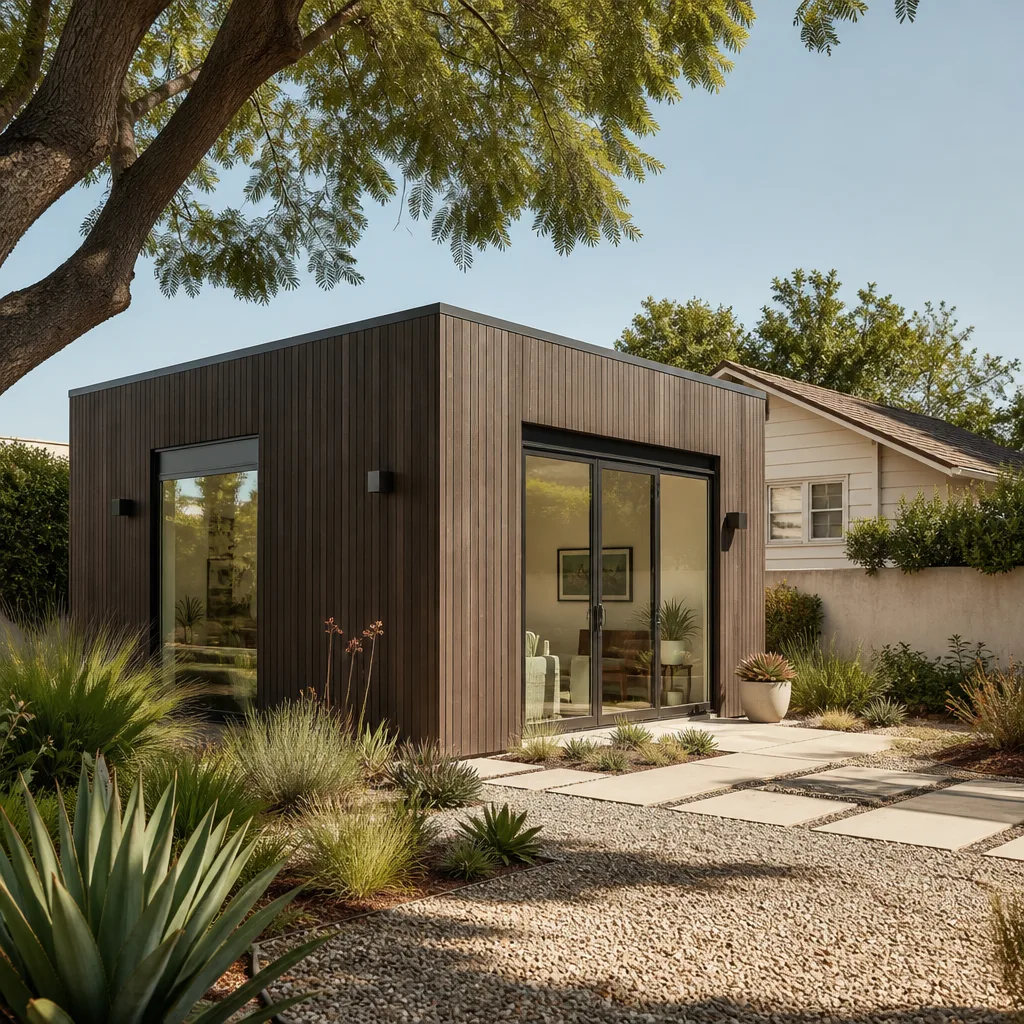
Long Beach’s mild climate is the reason ADU maintenance gets skipped, and the reason that skipping it is expensive. The city’s real seasons, marine layer humidity, salt air, Santa Ana winds, and a concentrated rain window, create a specific pattern of wear that doesn’t match the maintenance advice written for other parts of the country. The fix is a calendar built around those local patterns: seal in the spring, ventilate in the summer, secure in the fall, and inspect after every rain and every wind event. If you’re building a new ADU or converting a garage in Long Beach, the material and ventilation decisions you make now determine how much of this calendar you’ll actually need. And if you’ve inherited an existing ADU that hasn’t been maintained, start with a full walkthrough this month and build the habit from there. Small, regular attention in a city this mild is all it takes to keep an ADU performing for decades.
Written by Ben Ortega, Owner at Seedling ADU Long Beach, serving Long Beach since 2001.