Last updated October 15, 2026
How to Hire a ADU Contractor in Long Beach: A Step-by-Step Guide
The lowest bid you’ll get for an ADU in Long Beach will look like the right answer until about week four of construction. That’s typically when scope gaps, allowance substitutions, and change-order charges start appearing in your inbox. This guide is built to prevent that exact moment. You’ll learn how to verify a contractor’s actual permit history through the city’s public portal, what a trustworthy written proposal must include line by line, the seven interview questions that separate ADU specialists from general contractors who occasionally build them, and the difference between a warranty and a workmanship promise. For more guides & resources on ADU planning, explore our blog. By the end, you’ll have a baseline for evaluating any ADU contractor in Long Beach before you ever pick up the phone.
Quick Answer
Hiring an ADU contractor in Long Beach means verifying the contractor’s license and permit completion history through the city’s public portal, insisting on a written proposal with specific line items rather than lump sums, and confirming warranty terms in writing before signing. The homeowners who get burned are the ones who compared three bids without first knowing what a legitimate proposal looks like. Start with the baseline in this guide, then call (562) 362-4592 to schedule a free estimate with Seedling ADU Long Beach.
Table of Contents
- Step 1: Establish the Baseline for a Trustworthy Long Beach ADU Proposal
- Step 2: Verify Permit History Through Long Beach’s Public Portal
- Step 3: Read a Written Proposal Like an ADU Specialist
- Step 4: Name the Red Flags Before They Name Your Budget
- Step 5: Understand the Difference Between a Warranty and a Workmanship Promise
- Step 6: Use the Seven-Question Interview Script
- Step 7: Ask About Subcontractor Relationships and Site Protocols
- Common Mistakes to Avoid
- When to Call a Professional
- Frequently Asked Questions
- The Bottom Line
Step 1: Establish the Baseline for a Trustworthy Long Beach ADU Proposal
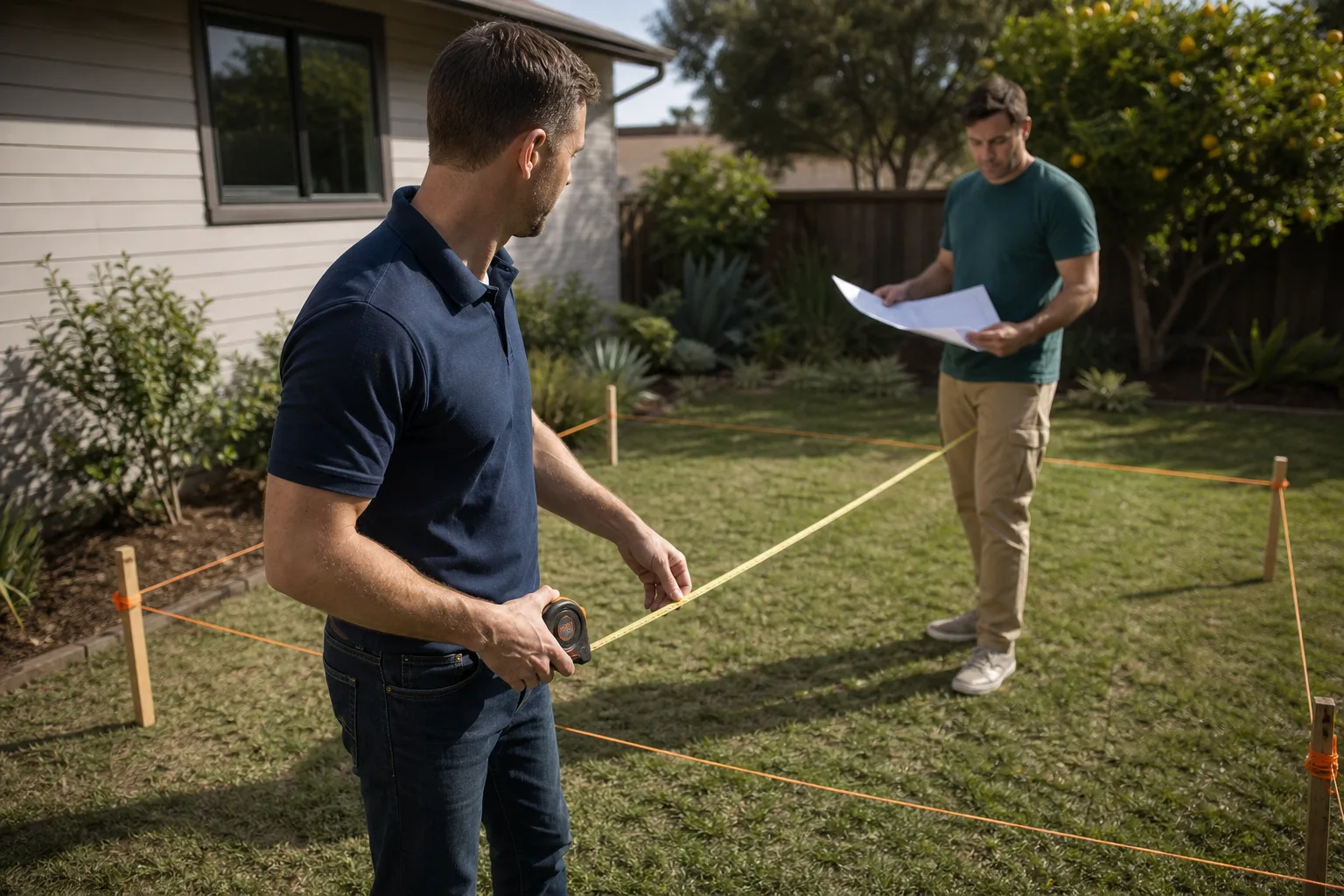
Most homeowners in Long Beach start the hiring process backwards. They collect three bids, line them up side by side, and pick the one that feels most reasonable. The problem is that “reasonable” means nothing without a baseline. A proposal from a contractor who plans to cut scope will always undercut a proposal from one who doesn’t. So before you compare anything, you need to know what a complete, honest ADU proposal for a Long Beach property actually contains.
Here’s the baseline. A trustworthy written proposal for a Long Beach ADU includes, at minimum:
- A defined scope of work that names specific materials by brand or equivalent standard, not vague phrases like “quality fixtures” or “standard finishes.”
- A line-item cost breakdown separating site preparation, foundation, framing, roofing, electrical, plumbing, HVAC, insulation, drywall, flooring, fixtures, and finish carpentry.
- A stated allowance schedule for items like tile, lighting, and hardware, with dollar figures attached to each allowance.
- A payment schedule tied to completion milestones, not calendar dates.
- Permit fee estimates listed separately from labor and materials.
- Warranty terms described in writing, including duration and what triggers coverage.
- Exclusions clearly stated, so nothing is “discovered” mid-project.
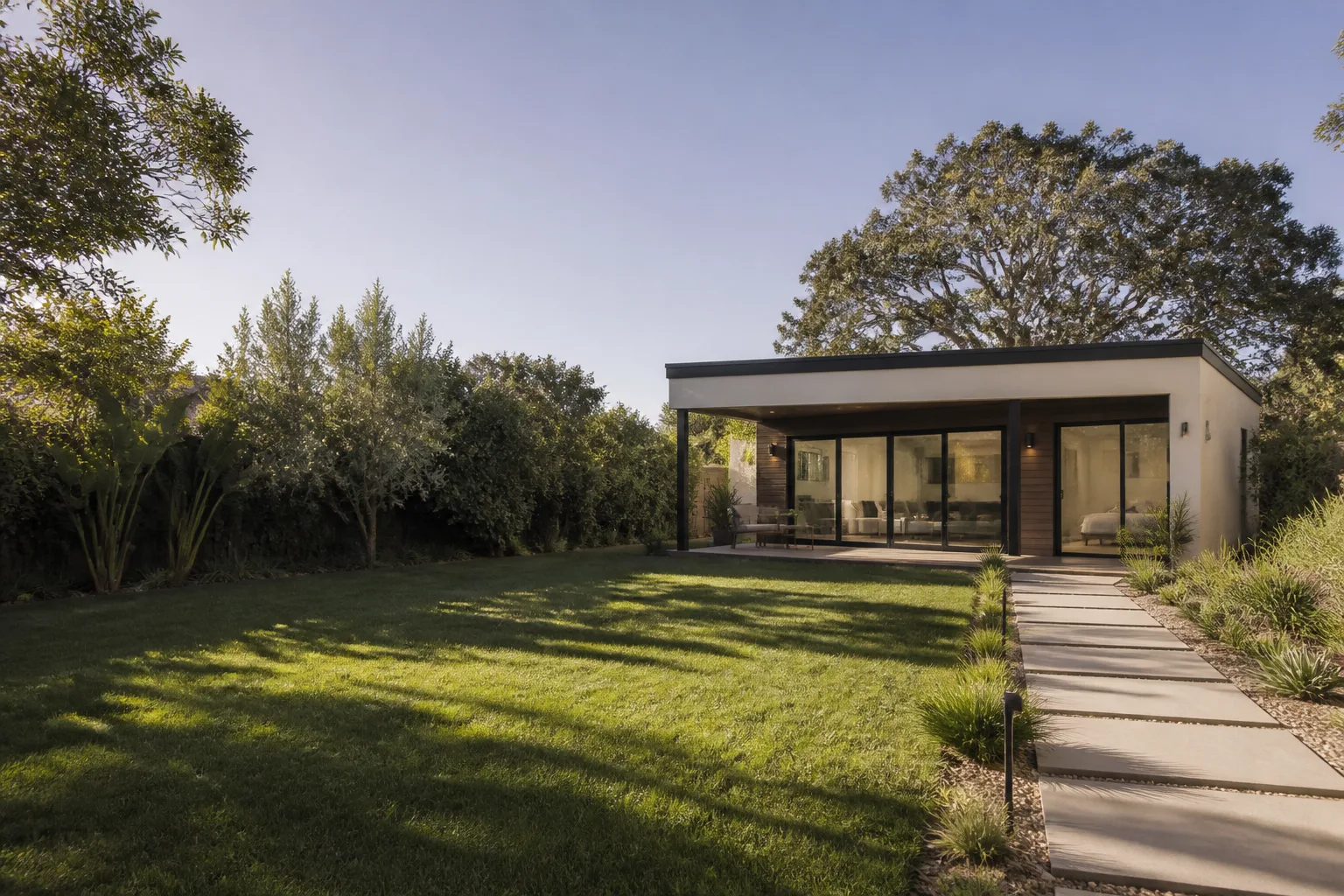
In our experience working across Long Beach neighborhoods from Bixby Knolls to Belmont Heights, we’ve seen the difference a written price makes before a single tool is picked up. At Seedling ADU Long Beach, every family receives a written price before any work starts, with no surprise line items added after crews arrive. When you have that document in hand, comparing contractors becomes a process of reading carefully rather than guessing. You can learn more about what we build on the Seedling ADU Long Beach home page.
Long Beach’s unique climate also shapes what a proposal should include. The marine layer brings moisture, and many neighborhoods sit on older foundations that need evaluation before an ADU goes up. See our Seasonal ADU Care for Long Beach: Year-Round Homeowner’s Guide for how weather patterns affect ongoing maintenance. A contractor who has built multiple ADUs in Long Beach will mention soil testing, drainage, and termite inspection without being asked. A contractor who hasn’t won’t think to bring them up until the change order arrives.
Step 2: Verify Permit History Through Long Beach’s Public Portal
The City of Long Beach maintains a public permit portal through its Development Services department, and this is the most underused tool available to homeowners hiring an ADU contractor. A contractor can tell you anything in a sales meeting. Their permit record tells you what they actually did. Here’s how to use it.
- Ask for the contractor’s state license number before the first site visit. A legitimate ADU contractor in Long Beach will provide this without hesitation. If they deflect or say they’ll “get back to you,” that’s your first signal.
- Verify the license through the Contractors State License Board (CSLB). Check that the license is active, has no unresolved complaints, and lists the correct classifications. For ADUs, you want a General Building Contractor (Class B) or a specialty combination relevant to the scope.
- Search the City of Long Beach’s permit search portal. Enter the contractor’s name or license number. Look for ADU-specific permits, garage conversion permits, and home addition permits. Note the addresses, dates, and whether permits were finaled or left open.
- Look at finaled permits, not just issued permits. A permit that was pulled and then abandoned tells you a project stalled. A finaled permit means the work passed inspection and the city closed the file. Contractors with a pattern of open, unfinaled permits across multiple Long Beach addresses are contractors whose jobs didn’t finish cleanly.
- Check for permit violations or stop-work orders. The portal will show if the city ever halted a job. This isn’t necessarily a dealbreaker, but it demands a direct question about what happened.
This step alone eliminates a meaningful percentage of contractors who market themselves as ADU builders in Long Beach but lack the completion history to back it up. It’s not about finding perfection. It’s about finding a pattern of finished work. A contractor with thirty finaled ADU permits across Long Beach neighborhoods is a different hire than one with three issued permits from five years ago and none finaled. Ben Ortega, who leads Seedling ADU Long Beach, encourages every prospective client to run this exact check before we even set a meeting. A contractor who invites scrutiny is usually one who passes it. If you’re also considering a Home Addition Contractor in Long Beach, the same public record applies.
Step 3: Read a Written Proposal Like an ADU Specialist
Once you have a proposal in hand, you need to read it the way an ADU specialist would. That means looking past the total price and into the structure of the document. Here’s what to look for, line by line.
Line items with dollar figures. A proposal that lists “ADU construction: $185,000” as a single line is not a proposal. It’s a guess. A real proposal breaks out site work, foundation, framing, roofing, electrical, plumbing, HVAC, insulation, drywall, finishes, and fixtures, each with a dollar amount or an explicit allowance range. Long Beach ADU construction typically falls between roughly $180 and $400 per square foot depending on site conditions, finish level, and whether you choose site-built or a prefab system like Plant Prefab or Boxabl. For a deeper dive, see our ADU Cost Breakdown: The Long Beach Homeowner’s Reference for 2026. A proposal that doesn’t match that range should come with a clear explanation of why.
Named materials by brand or specific standard. Look for phrases like “James Hardie HardiePlank lap siding” or “LVP flooring, 12 mil wear layer.” Look out for phrases like “premium flooring” or “quality windows.” The first tells you what you’re paying for. The second tells you nothing.
Allowances with stated dollar amounts. Every ADU has finish selections, and every finish selection has a price range. A good proposal lists each allowance category (flooring, tile, lighting, plumbing fixtures, hardware) with a dollar figure and a note that selections above the allowance get added as a signed change order before the material is ordered. A vague proposal avoids allowances entirely, which means you’ll find out the real cost when you’re picking tile at the showroom.
Exclusions in plain writing. If the proposal doesn’t say what’s not included, assume everything not listed is an extra. Look for statements like “landscaping not included,” “interior painting of existing home not included,” “utility trenching beyond 50 feet not included.” A contractor who writes exclusions is a contractor who has done this long enough to know what surprise costs look like.
A clear payment schedule tied to milestones. Your proposal should say something like “10% at contract signing, 25% at foundation completion, 25% at rough framing and roofing, 25% at drywall, 15% at final inspection.” It should never say “50% upfront.” In Long Beach, and everywhere else in California, state law caps the down payment for home improvement contracts at 10% or $1,000, whichever is less.
Step 4: Name the Red Flags Before They Name Your Budget
Change orders are how ADU projects in Long Beach quietly double. The original contract was never the real price. It was the price that got you to sign. Here are the red flags that signal that pattern before you’re committed.
- The price is meaningfully lower than every other bid, with no explanation. Contractors in the Long Beach ADU market are bidding against similar material costs and similar labor rates. A bid 30% below the next closest is not a discount. It’s a scope gap, and you’ll pay for it later.
- “Allowances” appear without dollar amounts. If the proposal says “flooring allowance” but doesn’t say how much, the allowance is whatever the contractor decides it is when you’re standing in the showroom. That’s not an allowance. That’s an open checkbook.
- The contractor won’t write down the price. Anyone who says “we’ll work out the details as we go” is telling you the details will work out to their benefit later. A written price before work starts is the floor of trust. At Seedling ADU Long Beach, every family gets that written price before a single tool is picked up, and nothing gets added unless it’s a signed change order the homeowner approved in advance.
- No permit line item. Every legitimate ADU in Long Beach requires permits. A proposal without a permit fee estimate means the contractor either doesn’t plan to pull permits (which is illegal and dangerous) or plans to surprise you with the cost later. Either way, walk.
- The subcontractor list is a secret. A contractor who won’t tell you who will pour your foundation or run your electrical is a contractor who hasn’t built a stable network. In Long Beach, the best ADU builders have long-standing relationships with the same framing crews, plumbers, and electricians who show up job after job.
- Warranty terms are verbal. “We stand behind our work” is not a warranty. It’s a sentence. If the warranty isn’t written into the proposal, it doesn’t exist.
Step 5: Understand the Difference Between a Warranty and a Workmanship Promise
Most homeowners use “warranty” and “workmanship promise” interchangeably, but in ADU construction they are different things, and the difference shows up the first time something goes wrong after move-in. Here’s the distinction.
A product warranty covers materials. Your windows have a warranty from the manufacturer. Your water heater has one. Your James Hardie siding has one. These warranties are written by the company that made the material, and they cover defects in manufacturing. If a window seal fails, the window manufacturer replaces it. What a product warranty does not cover is the labor to remove the failed window, install the replacement, and fix the drywall around it. That’s where the workmanship promise comes in.
A workmanship promise covers labor. This is what the contractor provides, and it should be in writing. It says: if the work we did fails because of how we did it, we will come back and make it right. This is the 365-Day Done Right Promise that covers every ADU, garage conversion, and home addition Seedling ADU Long Beach builds. It’s not just a phrase. It’s a written commitment that if it’s not done right, we make it right, and it’s in the contract before you sign.
Why does this distinction matter after move-in? Because most post-construction problems are not clean product failures. They’re installation issues. A door that binds is usually a framing or hinge installation issue, not a door manufacturer defect. A roof leak is usually flashing, not shingles. A product warranty won’t cover the labor to fix those problems. A workmanship promise will. Before you hire any ADU contractor in Long Beach, ask this exact question: “If something fails because of how it was installed, not because of the material, what does your written commitment look like?” If the answer is a sentence instead of a document, keep looking.
Step 6: Use the Seven-Question Interview Script
Here’s a concrete script you can use in a first meeting or phone call with any Long Beach ADU contractor. These seven questions are designed to separate ADU specialists from general contractors who occasionally build them. The answers reveal more than the resume.
- “How many ADUs have you completed in Long Beach in the last two years, and can I see the permit record for them?” A specialist will name addresses and finaled permit numbers. A generalist will talk about “a few projects” and change the subject.
- “Who will run my job day to day, and will that person be reachable by phone during the build?” You want a named project lead, not an answering service. At Seedling ADU Long Beach, a live person answers calls 24/7 during an active build, so a question about schedule or site access never waits until the next business day.
- “What is your payment schedule, and does it comply with California’s 10% down payment cap?” If they ask for 50% upfront, the interview is over. State law is clear, and a contractor who doesn’t know it or chooses to ignore it is a risk to your money.
- “How do you handle changes to the scope once work starts?” The right answer describes a signed change order process with pricing approved before work begins. The wrong answer is “we’ll figure it out as we go.”
- “What does your workmanship commitment cover after final inspection, and is it in writing?” This is the warranty-versus-workmanship question from Step 5. Get the answer in the contract, not the conversation.
- “Who are your primary subcontractors for electrical, plumbing, and concrete, and how long have you worked with them?” Long Beach’s best ADU builders have stable crews they’ve used for years. A contractor who uses a rotating cast of whoever is available is a contractor who can’t predict quality or schedule.
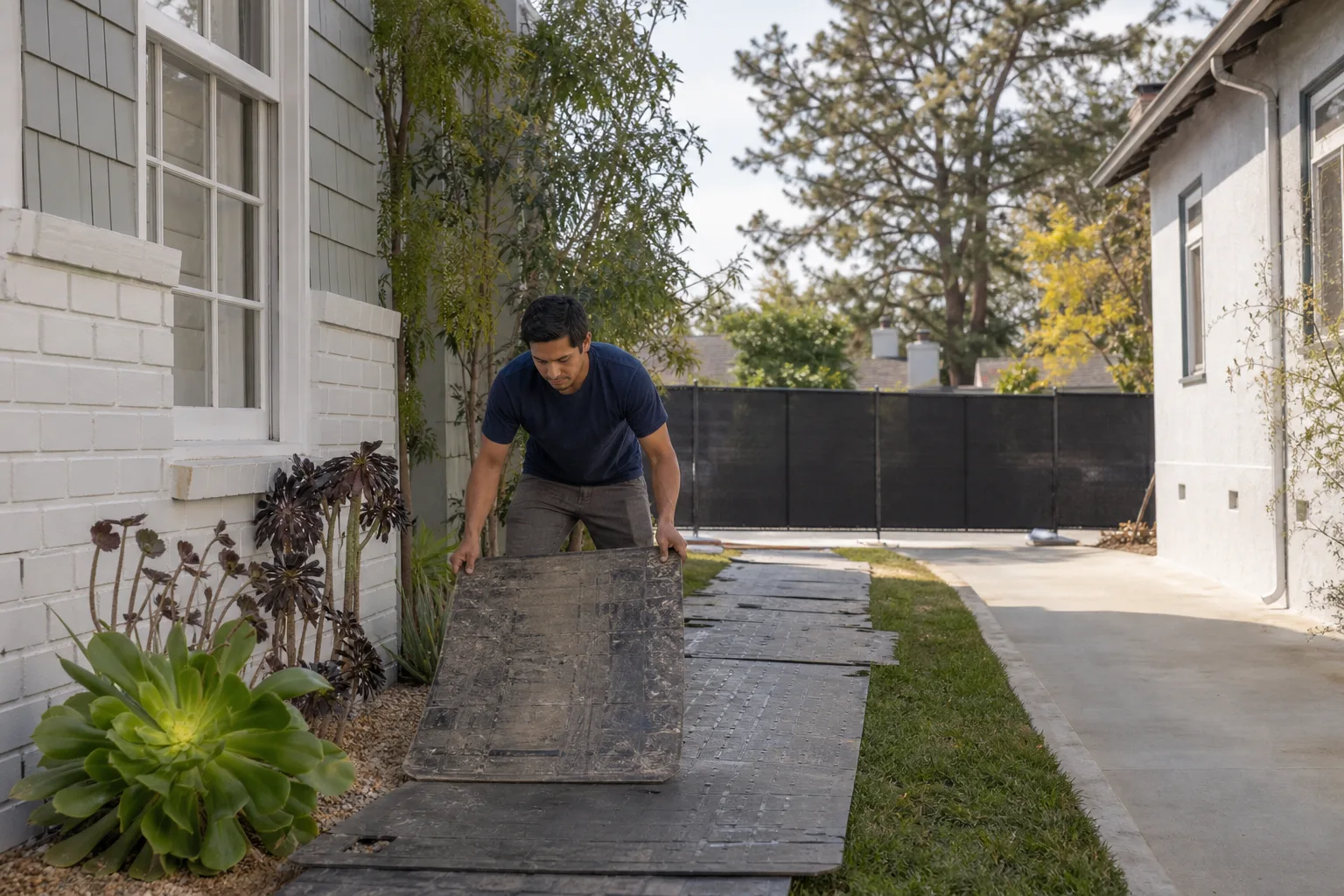
- “What is your protocol for protecting the inside of my home during the build?” If you’re adding an ADU to a lot with an existing home, crews will move through your space. Ask about shoe covers, drop cloths, dust barriers, and cleanup procedures. Seedling ADU Long Beach operates under the Cedarwell Care Promise, which means shoe covers and drop cloths inside the home, pet-safe products where there is a choice, and a photo of the clean-up before the crew leaves every day.
If you’re converting an attached garage, the question about protecting your home becomes even more relevant, since the crew will be working directly against your living space. You can learn more about what that process looks like on our Garage Conversion Contractor in Long Beach page.
Step 7: Ask About Subcontractor Relationships and Site Protocols
An ADU is not built by one person. It’s built by a network of crews: concrete, framing, roofing, electrical, plumbing, HVAC, drywall, finishes. The quality of your ADU depends on the quality of those crews and how well the general contractor manages them. Here’s what to ask and what the answers mean.
Ask how long the contractor has worked with each primary subcontractor. In Long Beach, solid working relationships are built over multiple projects across multiple neighborhoods. A contractor who has used the same electrician on every Long Beach ADU for four years knows that electrician’s work quality, schedule reliability, and communication habits. A contractor who is “trying out a new crew” on your project is using your home as a test case.
Ask about site protocols for cleanliness and safety. This matters more than most homeowners realize. An ADU build in Long Beach often happens while a family lives in the main home. Kids and pets are part of the equation. Ask how the site is left at the end of each day. Ask whether materials are secured. Ask whether the crew wears uniforms and whether background checks are part of the hiring process. At Seedling ADU Long Beach, background-checked, uniformed technicians show up to every job, and the Cedarwell Care Promise means families with kids and pets know exactly who is walking through their door.
Ask about noise and schedule respect. If your ADU is going up near bedrooms or during school hours, the crew’s approach to noise matters. Quiet tools, limited early-morning work near the house, and communication before any loud phase (hammering, demolition, concrete cutting) are reasonable expectations. A contractor who treats your family’s schedule as an afterthought is a contractor who treats your home as a job site rather than a living space.
Ask about material sourcing and brand relationships. Long Beach homeowners building ADUs increasingly consider prefab and modular systems as alternatives to site-built construction. These systems have different lead times, different foundation requirements, and different price structures. A contractor with hands-on access to leading brands like Plant Prefab, Boxabl, and Tuff Shed can walk you through tradeoffs honestly rather than steering you to whatever they prefer to sell. Seedling ADU Long Beach works with these systems and materials because the right choice depends on your lot, your budget, and your timeline, not on what’s convenient for the builder.
Common Mistakes to Avoid
- Comparing bids without a baseline. Three bids mean nothing if you don’t know what a complete proposal contains. Most Long Beach homeowners who get burned didn’t pick the wrong contractor. They picked the wrong document.
- Skipping the permit history check. The City of Long Beach’s public portal is free to use and takes twenty minutes. Yet most homeowners never look. A contractor’s finaled permit record is the single most predictive fact about your project’s outcome.
- Signing a proposal with vague allowances. If “flooring allowance” has no dollar figure, you haven’t agreed to a price. You’ve agreed to a negotiation that will happen mid-project when you have no leverage.
- Ignoring the difference between warranty and workmanship promise. Product warranties cover materials. Workmanship promises cover labor. You need both, and you need them in writing. Verbal reassurance is worth exactly nothing after final inspection.
- Not asking who runs the job day to day. The salesperson who sold you the ADU is often not the person who runs the build. Ask who will be on site, who will answer your calls, and whether that person’s name is in the contract.
- Paying too much upfront. California law caps the down payment for home improvement contracts at 10% or $1,000, whichever is less. Any contractor asking for more is asking you to break the law and take on unusual financial risk.
- Choosing the lowest bid on an attached garage conversion without checking site protection protocols. When crews work directly against your living space, dust, noise, and foot traffic become daily realities. A low bid that doesn’t account for drop cloths, shoe covers, and daily cleanup is a low bid because it skips those steps. You’ll live with the consequences.
When to Call a Professional
You should call an ADU professional in Long Beach the moment you’re seriously considering an ADU, garage conversion, or home addition, not after you’ve already designed something in your head. A professional can evaluate your lot’s setbacks, soil conditions, existing utility capacity, and permitting path before you fall in love with a floor plan that won’t fit. If you’ve received a proposal from another contractor and something feels off, a second opinion on a written scope of work is always worth the time. If you’re comparing site-built against prefab systems, you’ll want guidance from someone who has worked with multiple approaches. Seedling ADU Long Beach offers free estimates in Long Beach, and Ben Ortega will walk you through the baseline before you ever sign anything. Call (562) 362-4592 to schedule yours. You can also explore what we build on our ADU Builders in Long Beach page.
Frequently Asked Questions
ADU construction in Long Beach typically ranges from roughly $180 to $400 per square foot, which means a 600-square-foot one-bedroom ADU usually lands between $108,000 and $240,000 before permit fees and site work, depending on finish level, foundation conditions, and whether you choose site-built or prefab construction. The range is wide because Long Beach lots vary significantly: properties in Naples and Belmont Shore have different soil and setback conditions than properties in North Long Beach or Wrigley. For an exact quote, call (562) 362-4592 to schedule a free estimate with Seedling ADU Long Beach.
A site-built ADU in Long Beach typically takes 8 to 14 months from design through final inspection, while a prefab ADU using a system like Plant Prefab or Boxabl can often be completed in 6 to 10 months once permits are issued. Long Beach’s permitting timeline varies by project complexity, with garage conversions and prefab units generally moving faster than detached new construction. Ask your contractor for a schedule tied to milestones, not calendar promises.
Yes, every ADU in Long Beach requires permits through the city’s Development Services department, including garage conversions and prefab units. The permit process covers plan review, structural review, and site review for setbacks, drainage, and utility connections. For full details, read ADU Permits, Codes & Inspections in CA: What You Need to Know. A contractor who suggests skipping permits is offering to put your family in an uninsurable, potentially unsafe structure.
A garage conversion turns your existing garage structure into living space, which is usually less expensive than building a detached ADU because the foundation, walls, and roof already exist. A detached ADU is a new structure built from the ground up on your lot. Garage conversions in Long Beach often face challenges with parking replacement requirements and ceiling height, while detached ADUs face challenges with setback compliance and utility trenching. You can learn more about the conversion process from our Garage Conversion Contractor in Long Beach page.
Yes, building an ADU in Long Beach will increase your property tax assessment because the addition adds value to your property. The increase is based on the assessed value of the new construction, not the full property, and many homeowners find the rental income or family housing benefit outweighs the tax change. Talk to a tax professional about your specific situation.
Yes, Seedling ADU Long Beach has hands-on access to leading prefab and modular ADU brands including Boxabl, Plant Prefab, and Tuff Shed, along with James Hardie materials for siding and trim. This matters because your lot’s conditions, your budget, and your timeline should determine the right construction method, not what a builder prefers to sell. Call (562) 362-4592 to discuss which system fits your property.
The Bottom Line
Hiring an ADU contractor in Long Beach is a vetting process, not a shopping process. The homeowners who get great results are the ones who establish a baseline before they compare proposals: verify the license and permit history through the city’s public portal, read every written proposal line by line, name the red flags early, and confirm warranty terms in writing. The homeowners who get burned are the ones who picked the lowest number and hoped for the best. Set the baseline first. Then call (562) 362-4592 for a free estimate from Seedling ADU Long Beach, and see what a complete, written proposal looks like for your property.
Written by Ben Ortega, Owner at Seedling ADU Long Beach, serving Long Beach since 2001.